Are you interested in forex trading, but unsure about how to choose a trading strategy that aligns with your goals? When it comes to selecting the right strategy for you, there are several key considerations that you should keep in mind. Understanding your risk tolerance, investment objectives, and time commitments are crucial factors in finding a forex trading strategy that suits your individual goals. By taking these considerations into account, you can navigate the forex market with confidence and increase your chances of success.

1. Initial Goal Setting
When starting out in forex trading, it is important to begin by clearly identifying your financial goals. Ask yourself why you want to trade and what you hope to achieve. Are you looking to generate additional income or are you aiming for long-term wealth accumulation? Understanding your financial goals will help you set realistic expectations and create a trading strategy that aligns with your objectives.
Aside from financial goals, it is also crucial to assess your risk tolerance. Every trader has a different level of comfort when it comes to taking risks. Some individuals may be more risk-averse and prefer conservative strategies, while others may be willing to take on higher risks for potentially higher returns. Understanding your own risk tolerance will guide you in choosing the appropriate trading strategy that matches your comfort level.
In addition to financial goals and risk tolerance, consider the time commitment you can dedicate to forex trading. Are you willing and able to actively monitor the markets and make quick decisions, or do you prefer a more hands-off approach? Determining your time commitment will help you choose between different trading strategies that require varying degrees of attention and involvement.
Finally, define your desired level of involvement in forex trading. Do you want to be actively involved in every aspect of the trade, or would you prefer a more automated approach? Some traders prefer to have full control over their trades, utilizing their own analysis and decision-making skills, while others may opt for systems that rely on algorithms or expert advisors. Understanding your preferred level of involvement will guide you in selecting a suitable trading strategy.
2. Understanding Market Analysis
To make informed trading decisions, it is crucial to understand the two main types of market analysis: technical analysis and fundamental analysis.
Technical analysis involves studying historical price data, chart patterns, and various technical indicators to predict future price movements. Traders using technical analysis believe that historical price patterns repeat themselves and that they can use these patterns to predict future price changes.
On the other hand, fundamental analysis involves evaluating economic and political factors that can impact the value of a currency. Traders who use fundamental analysis study economic indicators, news events, and government policies to determine the strength or weakness of a currency.
While technical analysis focuses on price patterns and indicators, fundamental analysis considers the underlying economic factors that drive market movements. Both approaches have their merits, and many traders combine elements of both in their analysis to gain a complete understanding of the market.
3. Short-Term vs Long-Term Strategies
When choosing a trading strategy, it is important to consider the time horizon over which you intend to hold positions. Different strategies are suited for different timeframes, and your choice will depend on your availability and preferences.
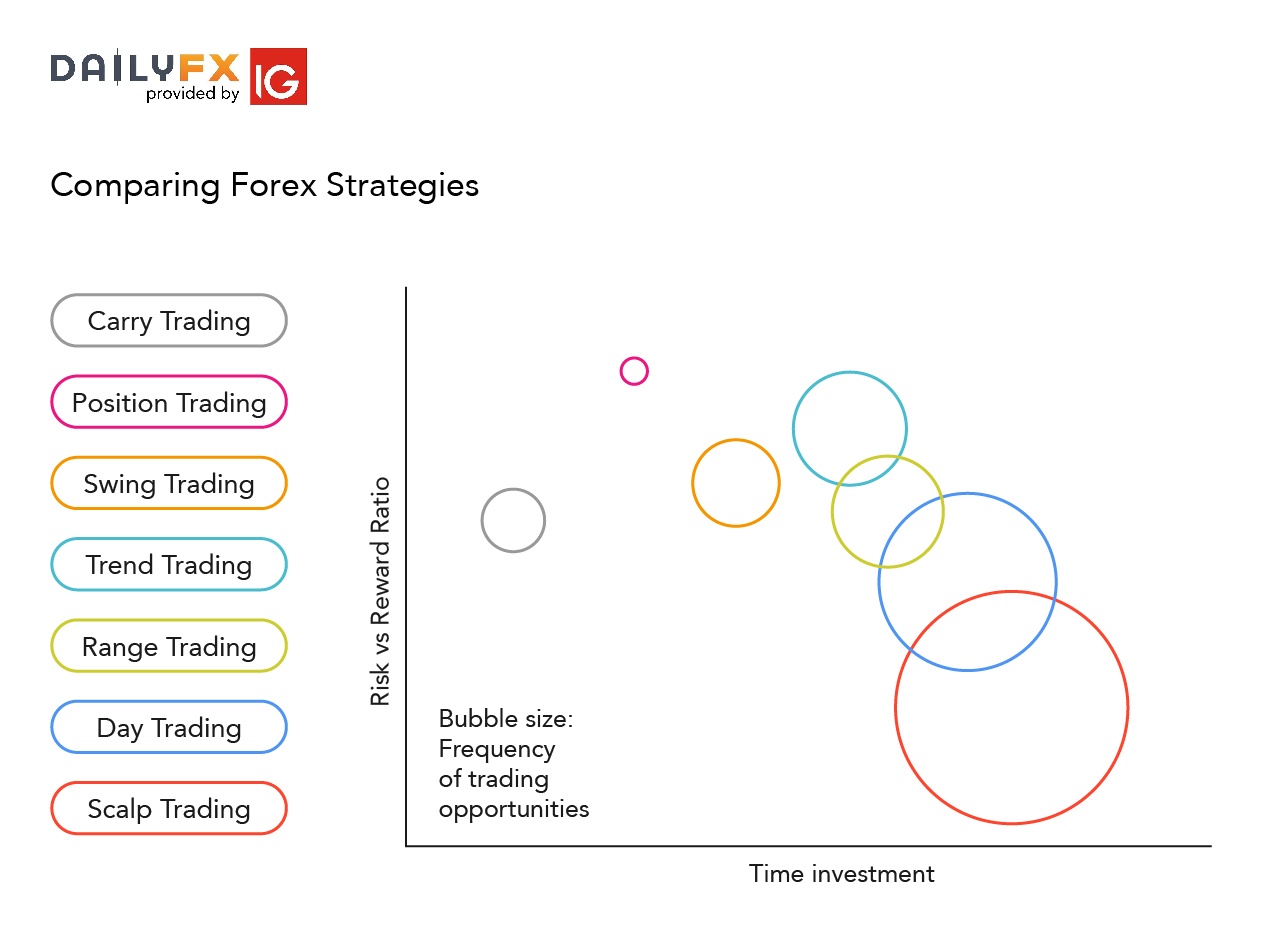
Scalping is a short-term trading strategy where traders aim to make quick profits from small price movements. This strategy requires constant monitoring of the market and executing trades within seconds or minutes.
Day trading involves opening and closing positions within the same trading day. Traders who employ this strategy take advantage of short-term price fluctuations and aim to generate profits by the end of the day.
Swing trading is a strategy that focuses on capturing medium-term price swings. Traders using this approach typically hold positions for several days to weeks, aiming to profit from larger price movements.
Position trading, also known as long-term trading, involves holding positions for weeks, months, or even years. This strategy takes advantage of longer-term trends and can require less frequent monitoring and trading activity.
Consider your availability and the time you can dedicate to trading when selecting a strategy. Scalping and day trading require active involvement, while swing trading and position trading offer more flexibility for those with limited time.
4. Risk Management
Effective risk management is crucial for any forex trader. To mitigate potential losses and protect your capital, consider implementing the following risk management principles.
Setting stop-loss and take-profit levels helps limit losses and secure profits. A stop-loss is a predetermined level at which you will exit a trade if the market moves against you, preventing further losses. A take-profit level is the price at which you will exit a trade if the market moves in your favor, locking in your desired profits.
Determining position sizes is another essential risk management practice. Position sizing refers to the number of lots or units you trade, and it should be based on your account size and risk tolerance. By not overexposing your account to a single trade, you can limit potential losses and protect your capital.
Implementing a proper risk-reward ratio is important to ensure that potential profits outweigh potential losses. A risk-reward ratio compares the potential gain of a trade to the potential loss. For example, a risk-reward ratio of 1:2 means that for every dollar you risk, you expect to make two dollars. By consistently maintaining a positive risk-reward ratio, you can increase the probability of long-term profitability.
Accounting for drawdowns, which are temporary declines in your trading account, is an important aspect of risk management. Drawdowns are inevitable in trading, and it is crucial to have a plan in place to manage them effectively. By allocating capital wisely and not risking too much on individual trades, you can weather drawdowns and protect your overall trading account.
5. Trading Style and Personality
Your trading style and personality play a significant role in choosing a suitable trading strategy. Consider the following factors when evaluating your preferences and strengths.
Analyzing preferred trading instruments is essential to ensure compatibility with your trading strategy. Forex trading offers a wide range of currency pairs, each with its own characteristics. Some traders may prefer to focus on major currency pairs for their liquidity and stability, while others may be drawn to exotic or minor pairs for potentially higher volatility and opportunities.
Identifying preferred trading timeframes is crucial to match your strategy with your availability and preferences. Shorter timeframes, such as scalping and day trading, require more frequent monitoring, while longer timeframes, like swing trading and position trading, offer more flexibility.
Consider your personal strengths and weaknesses when selecting a trading strategy. If you have a strong analytical mindset and enjoy research and data analysis, a more discretionary trading approach that relies on your analysis may suit you. Conversely, if you prefer a systematic approach and are disciplined in following predefined rules, a mechanical trading strategy that relies on algorithms or expert advisors may be a better fit.
6. Backtesting and Historical Data
Before implementing a trading strategy with real money, it is crucial to backtest your strategy using historical data. Backtesting involves analyzing how a strategy would have performed in the past to gain insight into its potential effectiveness.
Importance of testing strategies cannot be understated. By backtesting your strategy, you can identify its strengths and weaknesses, refine it, and gain confidence in its performance. This process allows you to make necessary adjustments and avoid potentially costly mistakes when trading with real money.
Gathering historical data is a crucial step in the backtesting process. There are various sources of historical data available, from free online platforms to paid subscription services. It is important to ensure that the data you use is accurate and covers a sufficient time period to provide meaningful results.
Utilizing demo accounts provided by forex brokers is an excellent way to test your strategy in a simulated trading environment. Demo accounts allow you to execute trades and observe their outcomes without risking real money. They provide a risk-free opportunity to fine-tune your strategy and gain confidence in your ability to implement it successfully.
Analyzing backtesting results is essential to evaluate the performance of your strategy. Examine metrics such as profitability, drawdowns, win-to-loss ratio, and average trade duration. By thoroughly analyzing the results, you can make informed decisions about whether to proceed with the strategy or make necessary adjustments.
7. Costs and Fees
When choosing a forex trading strategy, it is important to consider the costs and fees associated with trading. These costs can significantly impact your overall profitability and should be taken into account when evaluating different strategies.
Understanding spreads and commissions is essential when comparing brokerages. Forex brokers typically earn their profits through spreads, which are the difference between the bid and ask prices. Some brokers may also charge commissions on trades. It is important to consider the impact of spreads and commissions on your profitability and choose a brokerage that offers competitive rates.
Comparing brokerages is crucial to ensure you are getting the best value for money. Consider factors such as the quality of trade execution, customer support, regulatory compliance, and available trading platforms. Research and read reviews to make an informed decision about the brokerage that suits your needs.
Consider the overall trading costs associated with your chosen strategy. For example, if you are scalping or day trading and executing a high volume of trades, the costs associated with spreads and commissions can add up. It is important to factor in these costs when evaluating the profitability of your strategy.
Evaluating value for money is not solely about finding the cheapest option. Consider the quality of services provided by a brokerage and the value they bring to your trading experience. While cost is an important factor, it should not be the sole determining factor when choosing a brokerage and trading strategy.
8. Available Resources and Support
Access to educational material, market research, and analysis can greatly enhance your forex trading journey. When choosing a trading strategy, consider the resources and support available to you.
Educational material and courses provided by forex brokers or reputable third-party sources can help you learn the essential concepts, strategies, and techniques needed for successful trading. Look for brokers that offer comprehensive educational resources, including webinars, tutorials, ebooks, and video courses.
Access to market research and analysis is valuable in staying informed and making informed trading decisions. Some brokers offer daily or weekly market analysis reports, economic calendars, and real-time news updates. Consider whether these resources align with your preferred trading style and whether they provide the information necessary for your strategy.
Availability of customer support is crucial when you encounter issues or have questions about your trading. Look for brokers that offer responsive, knowledgeable, and accessible customer support channels, such as live chat, telephone, or email. Reliable customer support can provide assistance when you need it and help ensure a smooth trading experience.
Community and social interaction can also be valuable resources for forex traders. Some brokers offer forums, social trading platforms, or online communities where traders can exchange ideas, share strategies, and learn from each other. Engaging with other traders can provide insights and perspectives that can enhance your trading knowledge and performance.

9. Flexibility and Adaptability
When selecting a forex trading strategy, it is important to choose a strategy that allows for flexibility and adaptability. The forex market is dynamic and constantly evolving, and your strategy should be able to adjust to changing market conditions.
Selecting strategies with room for adjustment is essential to accommodate market volatility. Market conditions can change rapidly, and a strategy that is too rigid may not perform well in all market environments. Choose strategies that can be adapted or fine-tuned based on market conditions and performance.
Consider market volatility and changing conditions when choosing a trading strategy. Volatile markets can present both opportunities and risks, and your strategy should be able to navigate these fluctuations. Choose a strategy that aligns with your risk tolerance and can adapt to varying levels of volatility.
Adapting to evolving market trends is crucial for long-term success in forex trading. The market is influenced by various factors, including economic events, geopolitical developments, and technological advancements. Stay informed about market trends and adjust your strategy as needed to capitalize on emerging opportunities.
Aligning strategy with evolving goals is important to ensure that your trading approach remains aligned with your long-term objectives. Your goals may change over time, and your trading strategy should be flexible enough to adapt to these changes. Regularly review your strategy and make adjustments if necessary to align with evolving goals.
10. Implementing and Monitoring the Chosen Strategy
Once you have chosen a trading strategy that suits your goals and preferences, it is important to implement and monitor it effectively. Follow these steps to ensure a successful implementation.
Creating a trading plan is essential to provide structure and guidance for your trading activities. Your trading plan should outline your goals, trading strategy, risk management rules, and criteria for entering and exiting trades. Having a well-defined plan will help you stay disciplined and make informed decisions.
Setting realistic expectations is important to avoid disappointment and frustration. Understand that trading involves both winning and losing trades, and it is unlikely to generate consistent profits immediately. Set realistic goals and be patient as you work towards achieving them.
Monitoring and analyzing performance is crucial to assess the effectiveness of your chosen strategy. Keep a trading journal to record your trades, including entry and exit points, reasons for entering the trade, and the outcome. Regularly review your trading journal to identify patterns, strengths, and areas for improvement.
Making adjustments as needed is an ongoing process in forex trading. As you gain experience and gather more data, you may identify areas where your strategy can be refined or optimized. Be open to making necessary adjustments to improve performance and adapt to changing market conditions.
By following these considerations and guidelines, you can choose a forex trading strategy that aligns with your goals, suits your personality and preferences, and increases your chances of success in the dynamic and exciting world of forex trading. Remember to always approach trading with a disciplined mindset, continuously educate yourself, and adapt to changing market conditions for long-term profitability.