In the world of Forex trading, identifying and analyzing trend reversals plays a crucial role in making successful trading decisions. Understanding when a trend is about to shift can mean the difference between profit and loss. This article will guide you on how to effectively identify and analyze trend reversals in Forex trading, equipping you with the knowledge and skills to navigate the ever-changing currency markets with confidence. So, let’s embark on this journey together and unravel the secrets of trend reversals in Forex trading!
Understanding Trend Reversals in Forex Trading
Forex trading involves understanding and analyzing market trends to make informed trading decisions. One crucial aspect of forex trading is the ability to recognize trend reversals. These reversals mark a significant shift in the market’s direction and can present profitable trading opportunities. Thus, understanding trend reversals is vital for any forex trader looking to maximize their profits.
Definition of Trend Reversals
In forex trading, a trend reversal refers to a change in the direction of the market’s price movement. These reversals occur when an established uptrend changes to a downtrend, or vice versa. Traders seek to identify trend reversals to enter trades at the earliest possible stage, maximizing their potential profits.
Importance of Identifying Trend Reversals
Recognizing trend reversals is crucial for forex traders because it allows them to capitalize on new market conditions and profit from significant price movements. By identifying a trend reversal early on, traders can open positions in the opposite direction of the previous trend, enabling them to ride the new trend and generate substantial returns.
Factors that Contribute to Trend Reversals
Several factors can contribute to trend reversals in forex trading. These include economic data releases, geopolitical events, and changes in market sentiment. By understanding and monitoring these factors, traders can anticipate potential trend reversals and adjust their trading strategies accordingly.
Common Reversal Patterns in Forex Trading
Head and Shoulders
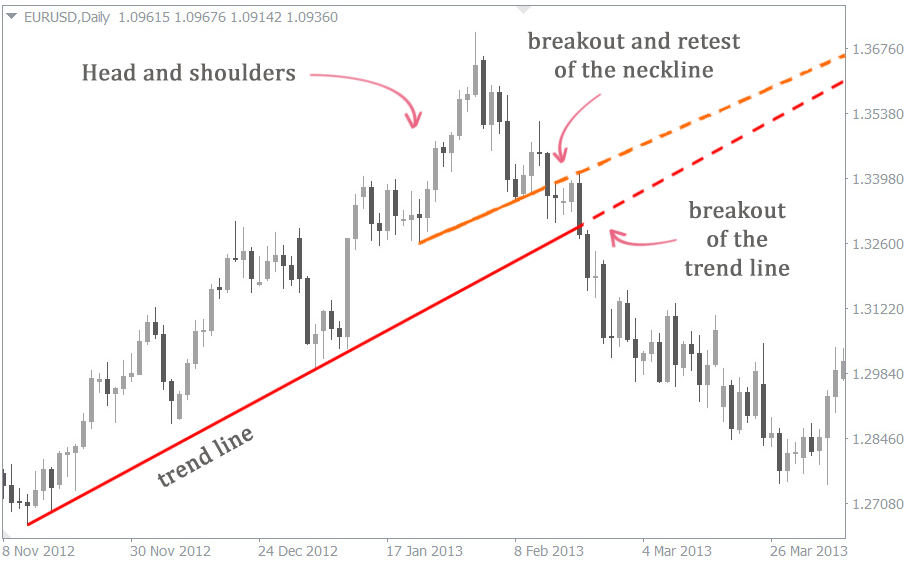
The head and shoulders pattern is one of the most well-known and reliable reversal patterns in forex trading. It consists of three peaks, with the middle peak being higher and broader than the other two. This pattern indicates a shift from an uptrend to a downtrend.
Double Tops and Bottoms
A double top is a reversal pattern that occurs when the price reaches a certain level twice and fails to break above it. Conversely, a double bottom occurs when the price reaches a certain level twice and fails to break below it. These patterns suggest a potential trend reversal.
Triple Tops and Bottoms
Similar to double tops and bottoms, triple tops and bottoms indicate a potential trend reversal. However, these patterns consist of three price peaks or valleys instead of two. Triple tops and bottoms are considered more significant and can lead to more substantial price movements.
Rising and Falling Wedges
Rising and falling wedges are patterns formed by converging trendlines. A rising wedge occurs when the price makes higher highs and higher lows, but the range between these highs and lows narrows. Conversely, a falling wedge occurs when the price makes lower lows and lower highs, but the range between these lows and highs narrows. These patterns often precede trend reversals.
Bullish and Bearish Divergence
Divergence occurs when the price’s direction and an oscillator’s direction diverge. Bullish divergence indicates a potential trend reversal from a downtrend to an uptrend, while bearish divergence suggests a potential reversal from an uptrend to a downtrend. Traders use various oscillators, such as the Relative Strength Index (RSI) and Moving Average Convergence Divergence (MACD), to identify divergence patterns.
Technical Indicators to Identify Trend Reversals
Moving Averages
Moving averages are widely used technical indicators that help identify trend reversals. Traders commonly use the crossover of shorter-term moving averages with longer-term moving averages to signal potential reversals. For example, a bullish reversal occurs when a shorter-term moving average crosses above a longer-term moving average, indicating a shift from a downtrend to an uptrend.
RSI (Relative Strength Index)
The Relative Strength Index (RSI) is a momentum oscillator that measures the speed and change of price movements. Traders often employ the RSI to identify potential overbought or oversold conditions, which can indicate an upcoming trend reversal. A reading above 70 suggests overbought conditions, while a reading below 30 suggests oversold conditions.
MACD (Moving Average Convergence Divergence)
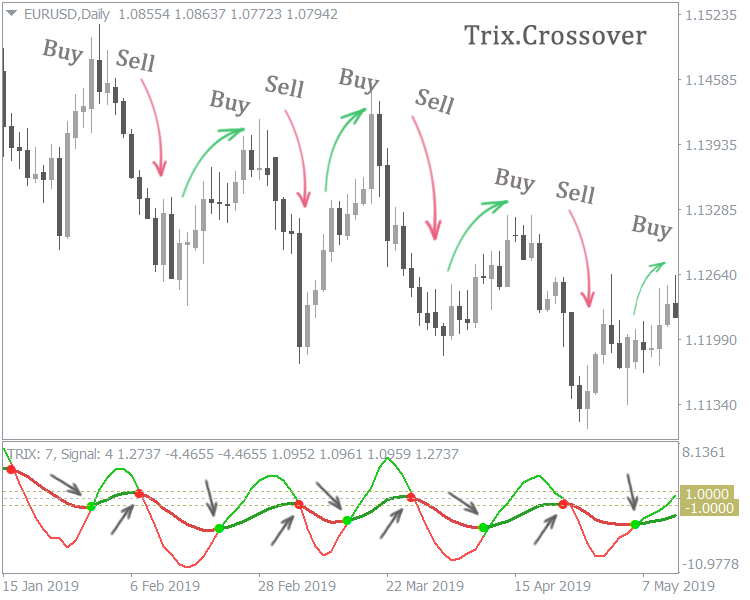
The Moving Average Convergence Divergence (MACD) is another popular momentum indicator used to identify trend reversals. Traders look for bullish or bearish crossovers between the MACD line and the signal line to signal potential reversals. A bullish crossover occurs when the MACD line crosses above the signal line, while a bearish crossover occurs when the MACD line crosses below the signal line.
Stochastic Oscillator
The Stochastic Oscillator is a momentum indicator that compares a security’s closing price to its price range over a specific period. Traders use the Stochastic Oscillator to identify potential overbought or oversold conditions, which can indicate trend reversals. Similar to the RSI, readings above 80 suggest overbought conditions, while readings below 20 suggest oversold conditions.
Ichimoku Cloud
The Ichimoku Cloud is a comprehensive technical analysis tool that provides various elements to identify potential trend reversals. It consists of multiple lines and a shaded area called the cloud, representing potential support and resistance levels. Traders analyze the interaction between these lines and the cloud to identify trend reversals.
Candlestick Patterns for Spotting Reversals
Doji
The Doji candlestick pattern is a popular reversal pattern characterized by a small body and long wicks on both ends. Its formation suggests indecision between buyers and sellers and can signal a potential trend reversal, especially when it occurs after an extended uptrend or downtrend.
Hammer and Hanging Man
The Hammer and Hanging Man candlestick patterns are similar in appearance but have opposite meanings. A Hammer pattern forms when the price falls significantly but recovers by the end of the period, indicating a potential trend reversal from a downtrend to an uptrend. Conversely, a Hanging Man pattern occurs after an uptrend and suggests a potential reversal from an uptrend to a downtrend.
Engulfing Patterns
Engulfing patterns occur when a candlestick completely engulfs the previous candlestick, indicating a potential trend reversal. A bullish engulfing pattern forms when a bearish candlestick is followed by a larger bullish candlestick, suggesting a reversal from a downtrend to an uptrend. Similarly, a bearish engulfing pattern occurs when a bullish candlestick is followed by a larger bearish candlestick, suggesting a reversal from an uptrend to a downtrend.
Shooting Star and Inverted Hammer
The Shooting Star and Inverted Hammer candlestick patterns have similar appearances but have opposite meanings. A Shooting Star pattern occurs at the end of an uptrend and suggests a potential reversal from an uptrend to a downtrend. Conversely, an Inverted Hammer pattern forms at the end of a downtrend and indicates a potential reversal from a downtrend to an uptrend.

Support and Resistance Levels in Trend Reversals
Identifying Key Support and Resistance Levels
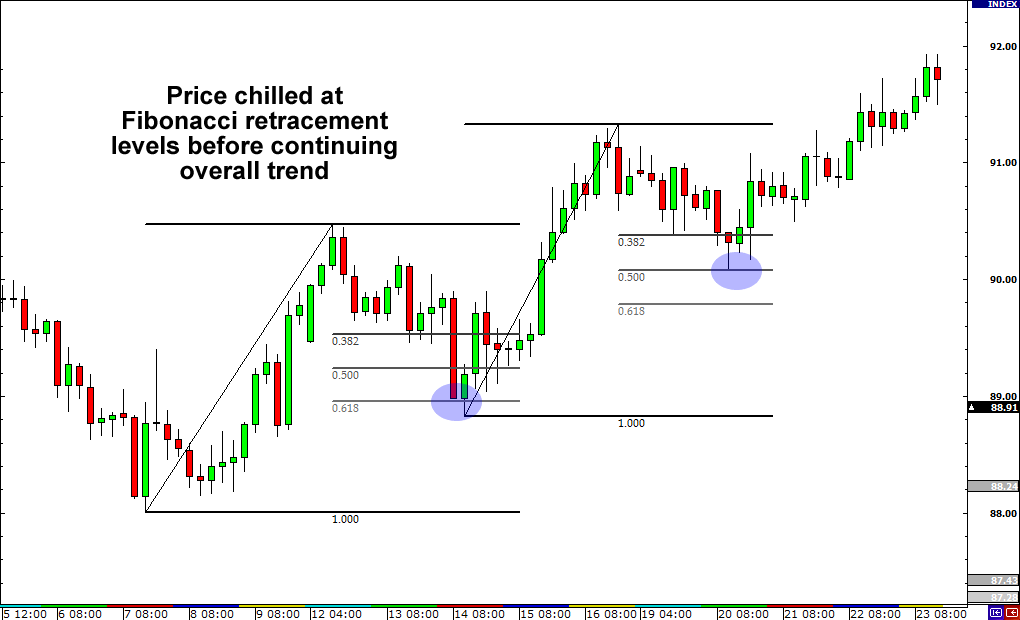
Support and resistance levels are price levels where the market has historically exhibited a strong buying (support) or selling (resistance) pressure. Identifying these levels is vital in determining potential trend reversals. Traders often use various technical analysis tools, such as horizontal support and resistance lines, Fibonacci retracement levels, and pivot points, to identify these key levels.
Role of Support and Resistance in Trend Reversals
Support and resistance levels play a significant role in trend reversals as they reflect market psychology and the collective decision-making of traders. When the price approaches a support level, buyers tend to step in and prevent further price declines, potentially leading to a trend reversal. Conversely, when the price approaches a resistance level, sellers may enter the market, potentially leading to a trend reversal.
Confirming Reversals Using Support and Resistance
Traders often use support and resistance levels to confirm potential trend reversals. For instance, if the price breaks above a significant resistance level, it suggests a bullish trend reversal, while a break below a significant support level suggests a bearish trend reversal. Confirming reversals using support and resistance can increase the probability of successful trades.
Momentum Oscillators for Analyzing Trend Reversals
ADX (Average Directional Index)
The Average Directional Index (ADX) is a momentum oscillator that measures the strength and direction of a trend. Traders use the ADX to identify potential trend reversals by analyzing its readings. A rising ADX above a certain threshold can indicate a strengthening trend, while a falling ADX suggests a weakening trend and a potential trend reversal.
CCI (Commodity Channel Index)
The Commodity Channel Index (CCI) is a versatile momentum oscillator used to identify potential overbought or oversold conditions and potential trend reversals. Traders often look for extreme CCI readings above +100 or below -100, which suggest overbought or oversold conditions, respectively, and may indicate an upcoming trend reversal.
Momentum Indicator
The Momentum indicator measures the speed and change of price movements over a specified period. Traders use the Momentum indicator to identify potential trend reversals by analyzing its readings. When the indicator shows divergence with the price or reaches extreme levels, it may indicate a possible trend reversal.
Volume Analysis in Trend Reversals
Understanding Volume Indicators
Volume indicators help traders analyze the volume of trades executed during a particular period. High volume often accompanies significant price movements and can provide insight into trend reversals. Traders commonly use volume indicators, such as the On-Balance Volume (OBV) indicator and the Volume Weighted Average Price (VWAP), to analyze volume patterns and identify potential trend reversals.
Volume Divergence
Volume divergence occurs when the price moves in one direction while the trading volume moves in the opposite direction. This divergence can indicate a potential trend reversal. For example, if the price is making higher highs but the volume is decreasing, it suggests a weakening trend and a potential reversal.
Confirming Reversals with Volume Analysis
Traders often use volume analysis to confirm potential trend reversals. If the price breaks a significant support or resistance level accompanied by high trading volume, it suggests a higher probability of a trend reversal. Similarly, if the price shows a significant reversal pattern, such as a head and shoulders, and is accompanied by high volume, it further confirms the potential reversal.
Combining Multiple Indicators for Accurate Reversal Signals
Using a Combination of Indicators
Forex traders often use a combination of technical indicators to increase the accuracy of reversal signals. By analyzing multiple indicators with different methodologies, traders can strengthen their trading decisions. For example, a trader may combine a moving average crossover with a momentum oscillator and a candlestick pattern to confirm a potential trend reversal.
Avoiding Signal Noise
While using multiple indicators can improve accuracy, it is essential to avoid excessive and conflicting signals, also known as signal noise. Too many indicators can lead to conflicting signals and confusion, making it challenging to make informed trading decisions. It is crucial to select a few reliable indicators that complement each other and provide clear signals.
Creating a Comprehensive Analysis
To create a comprehensive analysis, traders should consider combining indicators from different categories, such as trend-following indicators, momentum oscillators, and volume indicators. By incorporating various perspectives, traders can gain a holistic view of potential trend reversals and make more informed trading decisions.

Applying Fundamental Analysis in Trend Reversals
Economic News and Its Impact on Reversals
Fundamental analysis involves evaluating economic indicators, news releases, and other factors that influence a country’s currency value. Economic news releases, such as interest rate decisions, GDP reports, and employment data, can significantly impact trend reversals. For example, unexpectedly positive or negative news can trigger shifts in market sentiment, leading to trend reversals.
Interest Rates and Central Bank Policies
Interest rates and central bank policies play a crucial role in trend reversals. Central banks use interest rates and other policy tools to control inflation and stimulate economic growth. Changes in interest rates can result in shifts in capital flows, affecting currency values and potentially leading to trend reversals.
Political Events and Their Influence
Political events, such as elections, referendums, and geopolitical tensions, can have a significant impact on trend reversals in forex trading. Political stability, policy changes, and international relations can create uncertainty in the market, leading to shifts in market sentiment and potential trend reversals.
Developing a Reversal Trading Strategy
Setting Up Entry and Exit Points
A reversal trading strategy requires clear entry and exit points to capitalize on trend reversals. Traders may use technical indicators, such as those discussed earlier, to identify potential entry points. For example, a trader may enter a trade once a specific candlestick pattern or oscillator signal confirms a trend reversal. Additionally, setting up stop-loss and take-profit levels helps manage risk and secure profits.
Implementing Risk Management Techniques
Effective risk management is essential when trading trend reversals. Traders should determine an appropriate risk-to-reward ratio for each trade and set stop-loss orders to limit potential losses. Risk should be managed within predetermined parameters to ensure consistency and protect against significant drawdowns.
Backtesting and Refining the Strategy
To enhance the effectiveness of a reversal trading strategy, traders should backtest and refine it. Backtesting involves applying the strategy to historical market data to assess its profitability and identify areas for improvement. By analyzing past trades and making necessary adjustments, traders can optimize their strategies for current market conditions and increase their chances of success. Regular review and refinement are crucial to adapt to changing market dynamics.
In conclusion, understanding and analyzing trend reversals in forex trading is essential for maximizing profits and making informed trading decisions. By recognizing common reversal patterns, utilizing technical indicators, studying candlestick patterns, considering support and resistance levels, analyzing momentum oscillators and volume indicators, incorporating fundamental analysis, and developing a well-defined reversal trading strategy, traders can increase their chances of success in identifying and capitalizing on trend reversals.